
Foundation raising in Glendora, CA - the cause fixed first, then a careful lift
Sticking doors, sloping floors or a crack that keeps growing? We find why the house moved, then lift it only as far as makes sense.
- Licensed and insured.
- Free quotes on site.
- Expect a reply within 1 business day.
Is raising your foundation the right fix for your house?
Foundation raising in Glendora means separating your house from its foundation, lifting it on hydraulic jacks and holding it on temporary supports while a new or extended foundation is built underneath. It can bring a settled house back up, but it only holds if whatever made the house move gets fixed too.
Most people call after a door starts sticking, a floor begins to slope or a crack keeps coming back, and the first questions are what it costs and how long it takes. The price turns on what your house sits on, how far it has to come up, what it takes to fix whatever made it move and how many piers the job calls for, since each one is a post carried down to firm ground. The schedule follows the same things, mostly the foundation type and the pier count, and after I've walked your house I'll give you a written estimate that lists what's included.
How can you tell your house may need raising or leveling?
Doors that stick or won't latch
A door that closed fine last year and now drags or won't latch usually means one part of the house has dropped and pulled the frame out of square. Left alone, the frame and the walls around it tend to keep shifting, and there's more to straighten out later.
Cracks that keep coming back
Diagonal cracks running from the corners of windows and doors are the classic sign, and one that returns after you've patched it usually means the ground under that side is still moving. Patching again won't help until the cause is found, and each round of cracking adds to the repair bill.
Floors that slope or dip
If a marble rolls across the room or you feel a dip walking down the hall, a pier under a raised floor may have sunk or part of a slab may have settled. Waiting usually lets gaps open at the baseboards and tile crack, and those repairs come on top of the foundation work.
How we approach foundation raising
Before anyone talks about lifting, I want to know why your house moved, because raising it without fixing the cause only buys time. A house that moves a measurable amount each season has something still working on it, usually drainage, expansive clay that swells and shrinks with moisture, a leaking supply line or soil washing out, so we check where the water runs and look for leaks, and the fix goes into the same plan and budget as the lift. Then I'll tell you honestly whether a lift suits your house and how far it makes sense to go, because bringing a settled house all the way back to dead level can crack drywall, break plumbing lines and rack door frames that have adjusted to where the house sits now. Once the plan is settled, the house is lifted and held on temporary supports, and our crew digs out and packs the ground, then forms and pours the new footings, the wide concrete base a wall bears on, before the house is set down on them.
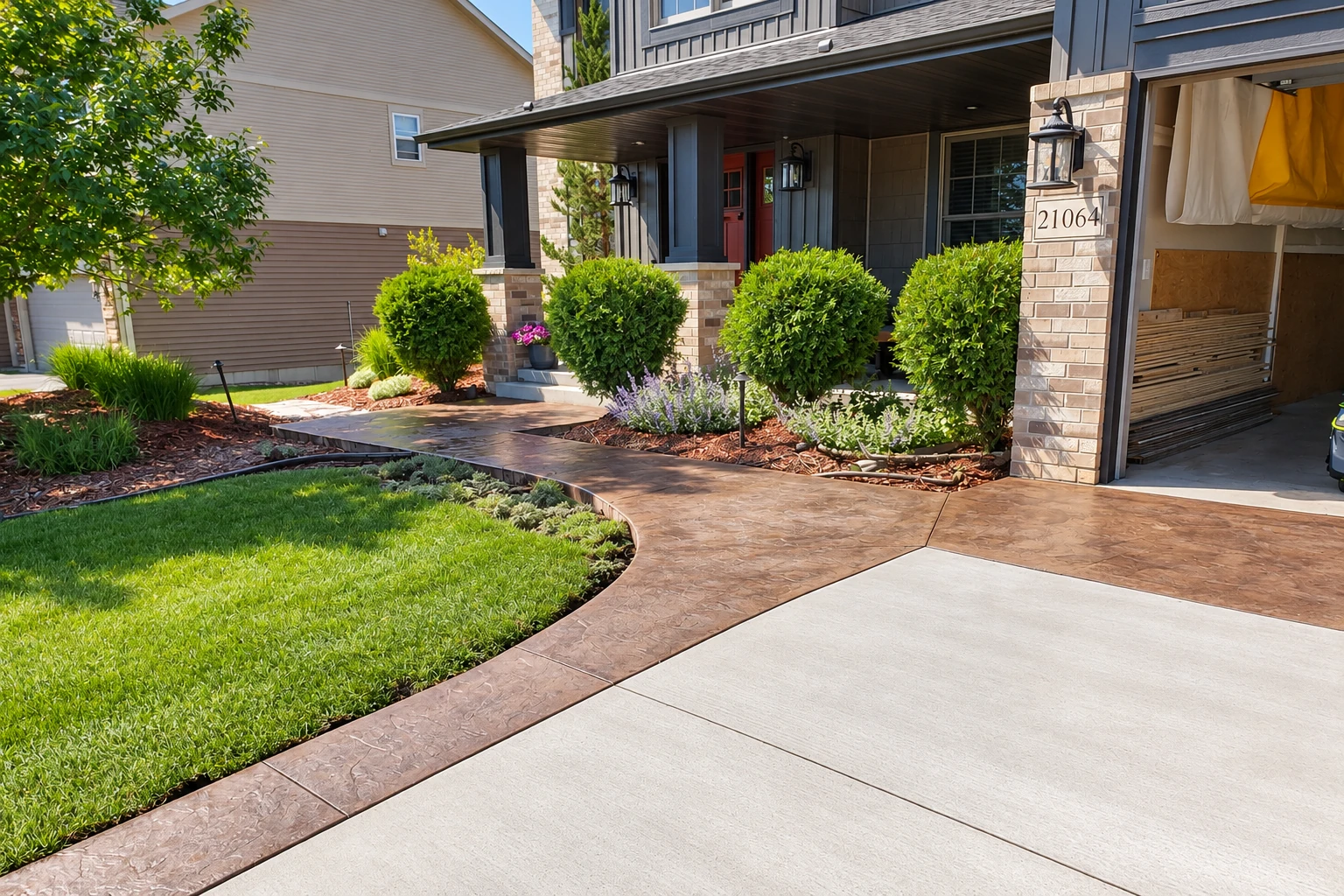
Foundation work often reaches past the house itself. When a new pier or footing has to go in under a garage floor, a walkway or a patio, we use concrete cutting to take out a clean section rather than break up the whole slab, so the patch afterward stays small and square. And if your driveway has sunk or tips toward the house and sends water against the foundation, replacing it through our concrete driveway building work can be part of fixing the cause, with a packed base and the new slab pitched to carry water away.
Homes on a crawlspace or raised floor
Lifting works well on houses with a crawlspace, a basement or an open foundation, because the house can come up off its supports while a new foundation is built beneath it. When the house only needs releveling, the framing is reachable from the crawl space, so the work is often shimming or replacing the piers.
Homes on a ground-level slab
If your house sits on a concrete slab, please ask early whether a lift suits it, because lifting a slab home with the slab intact often isn't feasible. Usually the conversation turns to leveling the slab rather than raising the house, and I'll explain what that would involve at the estimate.
Get a written estimate for raising or leveling your house
Send the form and we'll reply within one business day to set a time for me to come out. I'll look at the house, the drainage and the access, then give you a free written estimate that lists what's included, with no obligation.
(626) 513-4658Earthquake risk and permits for foundation raising in Glendora
A federal guide on raising homes notes that lifting a house can make it more likely to be damaged in an earthquake, so here that added risk belongs in the decision right beside your reasons for raising it. The state maps seismic hazard zones where weak soil or rock is likely under a property, ground that can fail in a quake and damage a house unless the right precautions are taken during grading and construction, and cities may set stricter rules than the state does, so please ask the City of Glendora what applies to your lot. When the job needs a permit, we handle the application and the inspections with the city or county office that covers your address, and I'll tell you at the estimate if I expect one.
We're based in Glendora and work across the San Gabriel Valley and the Pomona area, and we get the same kinds of calls on jobs in Azusa and San Dimas, often a raised-floor house with doors that have started to bind or a slab home with a crack that won't stay patched. The approach doesn't change from one city to the next.
What happens after you call us about foundation raising?
Call or send us the form
Call (626) 513-4658 or send the form, and we'll set a time for me to come out to your house. It helps to tell us whether the house sits on a slab or a raised floor, since that shapes what I look at.
Walk the house with me
I look at the foundation, the drainage and the access for equipment, and I answer your questions as we go. You get a written estimate that lists the work on the house and the fix for the cause, so you can see exactly what you'd be paying for.
Our crew does the work
If you'd like to go ahead, our crew does the prep and the pour with me on site, and the house stays on temporary supports until the new foundation is ready for it. We keep your yard and driveway as clear as the work allows and clean up as we go.
Walk the finished job together
At the end we walk the finished work with you and show you what was done under and around the house. We also go over how to look after it, mostly keeping water running away from the foundation.
Frequently asked questions
How much does it cost to raise a house in Glendora, and why do slab homes cost more?
Raising a house in the Los Angeles area usually costs about $12,000 to $68,000 per job, and that's the going range in the market, not our price. Leveling a slab home costs more because the slab has to be lifted on piers driven down to load-bearing soil, while on a raised floor the framing can be reached from the crawl space. Your written estimate will spell out what your house needs and what's included.
How long does house leveling take, and can I stay home during the work?
One house-leveling guide puts shimming a raised-floor house at 1 to 3 days and underpinning a slab home, setting it on piers down to firmer soil, at 3 to 7 days depending on how many piers go in. Most owners can stay home through it, though slab work is noisy and means digging around the outside of the house.
What is the best way to fix a sunken concrete slab?
Polyurethane foam and mudjacking are the two usual choices, and the better one depends on the slab and your budget. Foam is lighter, cures in minutes and generally lasts longer, but it costs more, while mudjacking, pumping a cement slurry under the slab to float it back up, is still a solid value for many slabs. I'll look at why the slab dropped before recommending either one.
How do I compare foundation raising quotes?
One guide's advice is to get an engineer's report first and then three bids against it, so every contractor is answering the same report. That works best when each bid spells out the work, which is why our written estimates list what's included.
Who repairs the drywall and plumbing after a house is raised?
It may not be the company that lifts the house, because repairs to the parts of the house that stay in place fall outside California's building moving license classification. Please ask each contractor who will handle those repairs and whether they're in the bid.
Is there a grant for earthquake retrofitting a house in California?
California's Earthquake Brace + Bolt program has offered grants of up to $3,000 to help homeowners retrofit against earthquake damage. The retrofit bolts the house to its foundation and adds bracing around the crawl space where it's needed. Since that offer comes from an earlier round, please check the program for current terms and who qualifies.
Glendora, CA
Tell us how your house has moved
If you've noticed the house shift with the seasons or already have an engineer's report, please mention it when you call or send the form, so I can come prepared with the right questions.