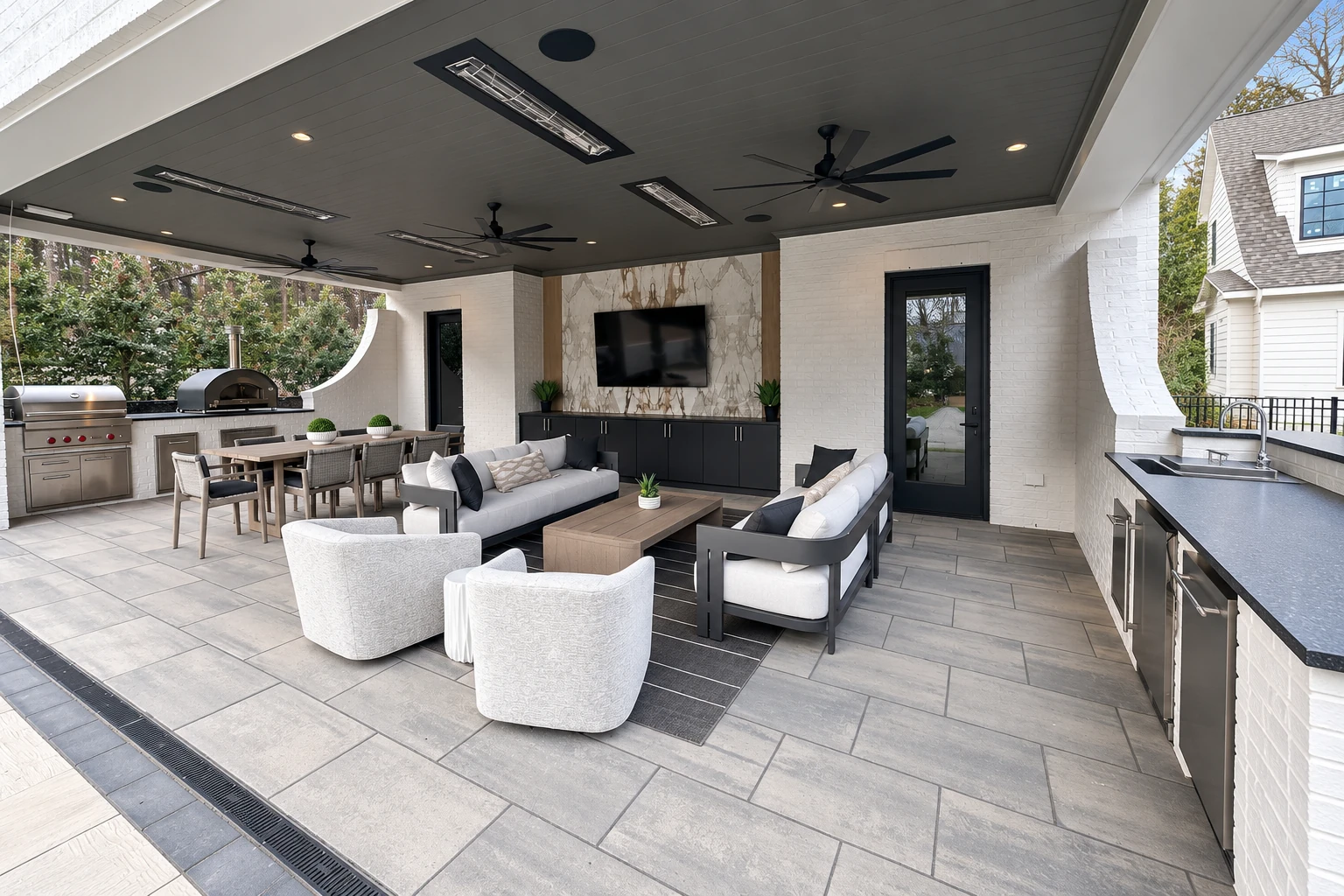
Concrete patio construction in Glendora, CA - a slab built on a solid base
If your old patio is cracked, sinking or holding water, we can replace it with a level slab that drains away from your house.
- Licensed and insured.
- Free quotes on site.
- Expect a reply within 1 business day.
What goes into building a concrete patio in Glendora?
Concrete patio construction in Glendora is the work of building a new outdoor slab that stays level and sends rainwater away from your house. At Liberty Glendora Concrete, the job runs from removing any old patio and digging out, through the base, the steel and the pour, to finishing the surface and letting the slab cure for a few days before you use it.
Most people call us because an old patio has cracked, tipped toward the house or started holding water, or because there's bare dirt out back where they'd like a place to sit. The price mostly turns on the size, whether an old slab has to come out, how much digging and base your ground needs, how easily we can get equipment into the yard and which finish you choose. The schedule turns on when I can come out, whether your job needs a permit and the weather on pour day, and the written estimate I leave with you lists each item so you can see what you're paying for.
How do you know it's time for a new patio?
Cracks that keep widening
A crack that grows wider, or lets one side sit higher than the other, usually means the ground under the slab has moved, often because the base was raked level instead of dug out and packed. Left alone, it lets water get underneath, which loosens more dirt and makes the eventual replacement a bigger job.
Water pooling by the house
If rain sits on the patio or runs back toward your walls, the slab was likely poured without enough fall away from the house, or it has settled since. Water against your foundation every storm is the kind of problem that costs more the longer it goes on.
A dusty, chipping surface
When the top flakes, wears down to sand or leaves grit on your shoes, the surface was often weakened on pour day, for example by pouring in the midday heat. A thin topping rarely holds up over a weak surface, so this usually points toward a new slab rather than another patch.
Our concrete patio construction, step by step
I start by pricing removal of any old patio, the prep and the finish as separate items, so you can see where the money goes before anything is torn out. Our crew breaks out the old concrete, digs down to firm ground and packs the subgrade, the soil the slab rests on, then builds a compacted base on top and checks that the finished surface will fall away from your house. We set rebar, steel bars that help hold the slab together if it cracks, and on pour day we plan around the heat of the day so the surface doesn't dry out too fast. After finishing, usually with a broom finish, a light texture that keeps the patio from getting slick when it's wet, we cut control joints on time. Those are shallow grooves that give the slab a straight place to crack instead of a random one, and then we keep the slab damp while it cures and gains strength. If the budget is tight, I'd rather you choose a plain finish than a thin base, because the base is buried on day one and is the part that decides whether the patio stays flat.
A patio often connects to other work. If you'd like a stone or brick look, our stamped concrete services press a pattern into the slab while it's still fresh, and a concrete sidewalk from the driveway or side gate gives you a clean, level path to reach the new patio.
Plain broom-finished patio
This suits most families who want a sturdy, slip-resistant place for a table and chairs, and it puts more of the budget into the base. It's also the simplest finish to keep clean and to match later if you add on.
Stamped patio finish
This suits you if the patio is a main part of the yard and you'd like it to look like stone or brick. I can price it beside a broom finish for the same area and prep, so the difference in cost is plain.
Get a written patio estimate, item by item
Send the form and we'll reply within one business day to set a time for me to come out. I'll look at the ground, the drainage and the access, answer your questions and leave you a free written estimate, with no obligation to go ahead.
(626) 513-4658Concrete patio construction in Glendora and the cities around it
The City of Glendora adopts Los Angeles County's Low Impact Development ordinance and manual by reference, so the county's rules are the ones that apply here. I don't assume a patio falls outside those rules or outside a permit, so I'll tell you at the estimate if I expect your job to need one. When it does, we handle the application and the inspections with the city or county office that covers your address.
On jobs here and in nearby Azusa and San Dimas, many patio calls are to replace an older slab that has tipped toward the house or to extend a small one, often with only a side yard for access, which shapes how we bring in material. We're based in Glendora and work across the San Gabriel Valley and the Pomona area, including many cities this site doesn't list.
What happens when you call about a patio in Glendora?
Call us or send the form
We get back to you and set a time for me to come out and look at the job. You don't need measurements or drawings, just a sense of where you'd like the patio.
I walk the job with you
I look at the ground, the drainage and how we'll get equipment into the yard, and I answer your questions. Your written estimate lists removal, prep and finish as separate lines, so you know what you're paying for before you decide.
We handle prep and pour
If you'd like to go ahead, we take care of any permit the job needs, and our crew does the digging, the base and the pour with me on site. Pour day is set around the weather, so it may move if the forecast turns dry and windy.
We walk the finished patio
When the work is done, we go over it with you and explain how to care for the slab while it cures and in the years after. Keeping it covered and leaving it alone for those first days protects everything underneath.
Frequently asked questions
How much does a concrete patio cost per square foot in Glendora?
Installing a concrete patio usually costs about $10.50 to $12.50 per square foot across the US, and that's a national figure for installation, not our price. Your own number depends on the size of the patio and the items I described near the top of this page. The written estimate I leave after the visit gives you the figure for your yard.
Can an unlicensed person pour my patio in California?
Only on a very small job. California lets someone without a contractor's license do work up to $1,000, and only when the job needs no permit and that person employs no one, so a patio above that amount, or one that needs a crew or a permit, falls outside it. Before hiring an unlicensed person for minor work, the state contractors board advises making sure they'll use no workers and that the project needs no building permits.
What is the best time of day to pour a concrete patio?
The best time is outside the hottest part of the day, and deliveries are scheduled that way when possible, because heat speeds setting and dries the surface fast. Heat problems show up most in summer, but high wind, low humidity and strong sun can do the same thing in any season. That's why we plan pour day around the weather, as I mentioned above.
How long does a new concrete patio take to cure?
Industry guidance says curing should start as soon as finishing ends and last at least 3 days. During that time the slab is kept wet with burlap and plastic, a liquid curing compound or water, so the surface doesn't dry out before it gains strength. Please plan on leaving the patio covered and alone through those first days, and I'll go over the details when we walk the finished work.
How do I compare concrete patio bids?
Check that each per-square-foot bid covers the same things, and one Los Angeles cost guide suggests looking for old patio removal, base preparation, reinforcement and access equipment. It's also fair to ask how the crew controls water added at the site, since added water can lower strength and durability and increase shrinking, especially in hot weather. One concrete maker's guide says a contractor has a joint layout prepared before construction, so you can ask to see it early.
What causes small cracks in a new concrete patio?
Fine, broken cracks that appear on the surface during or right after finishing are usually plastic shrinkage cracks, which form when surface water evaporates faster than water rises up through the fresh concrete. On dry, windy days, crews may need windbreaks, sunscreens, mist fogging or evaporation retardants to prevent them. They're a different thing from the cracks control joints are cut to guide.
Glendora, CA
Plan your new patio with us
If you have the rough size, any old patio that needs to come out and the finish you'd like in mind when you call or write to quotes@concreteglendora.com, I can come prepared and give you a closer estimate on the first visit.