Decorative concrete in Glendora CA - a finish that fits your yard and your budget
Tired of a plain gray patio or walkway? We help you choose a pattern, color and sealer, then build it on ground we prepare first.
- Licensed and insured.
- Free quotes on site.
- Expect a reply within 1 business day.
What is decorative concrete, and what does it take to do it right?
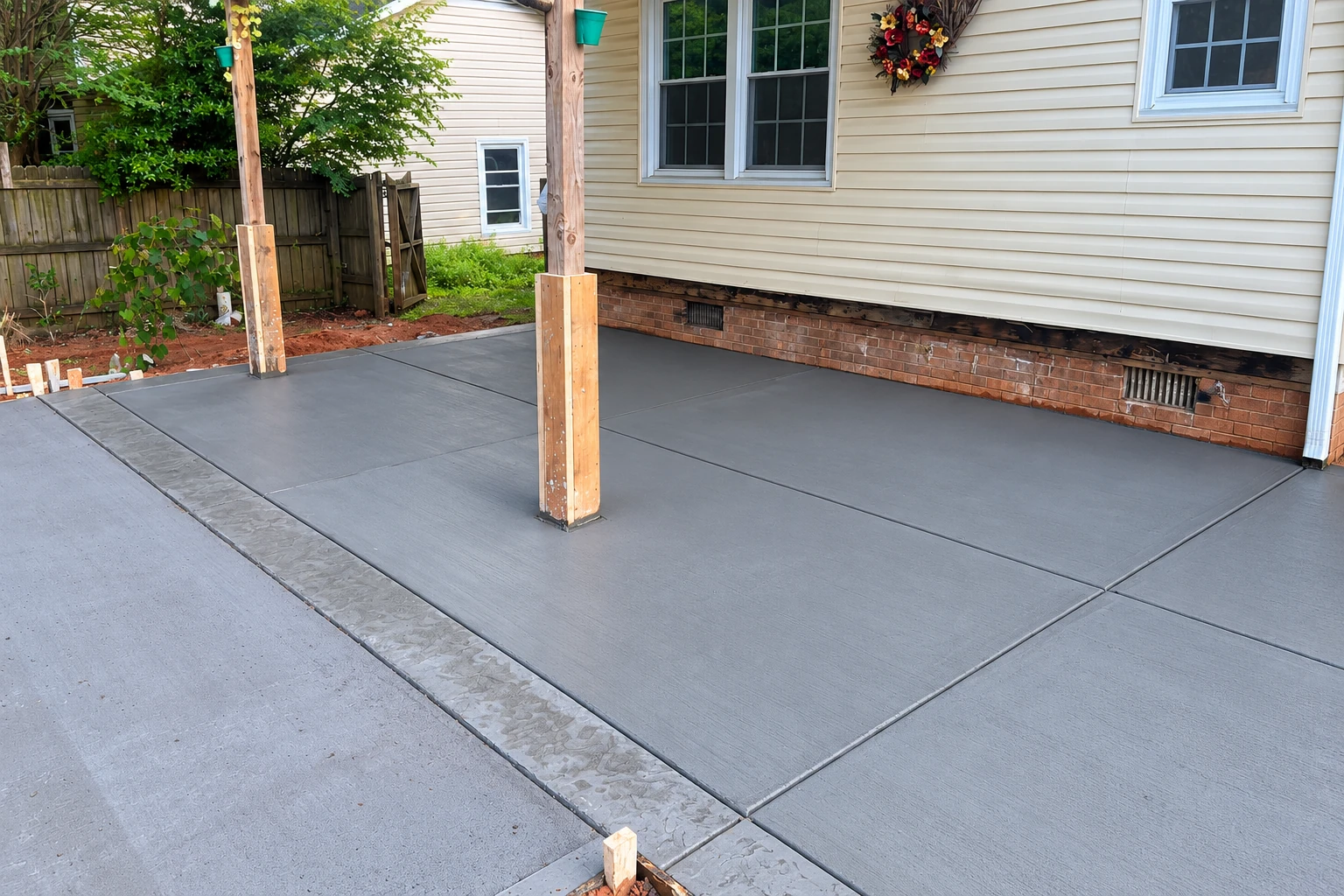
Decorative concrete in Glendora is a patio, walkway or driveway finished with stamped patterns, color or texture so it looks like more than a plain gray slab. These techniques are made to work together, so a single job can pair a stamped field with a colored border or a textured path.
Most people who call me have a concrete patio, walkway or driveway that works fine but looks tired, or a cracked slab that has to be replaced anyway, and they'd like the new one to be something they enjoy looking at. The price moves mostly with the size of the area, how detailed the pattern and color work is, whether an old slab has to come out first and how easy it is to get into the yard. The schedule turns on the weather and on curing, the wait while the concrete hardens and gains strength, because it has to cure before it can be sealed. After I look at the job, my written estimate lists what's included, so you can see what each choice adds.
How do you know your patio or walkway is ready for a decorative finish?
A plain slab you're tired of
Your patio or walkway is sound but plain, and it's the first thing you and your guests see. If the slab is in good shape, waiting costs you little beyond the look, so it's a fine time to plan a design without hurrying.
Cracks or a sinking corner
Cracks that keep widening or a corner that has dropped usually mean the ground underneath has settled or washed out, and a new finish laid over that won't fix it. The longer it waits, the more water gets under the slab and the bigger the trip hazard grows.
Color that has gone dull
A stamped surface that looks washed out, with water soaking in instead of beading up, usually has a worn sealer. Left alone, it starts taking in stains and dirt that are harder to clean out later.
How we build decorative concrete
I start by showing you how a few finishes can work together and helping you pick a sealer that fits both the look and the footing you want. Then our crew digs out the soft soil and packs the subgrade, the ground the slab sits on, checks which way the water will run so the slab falls away from your house, and sets the forms. We pour in the cooler part of the day, because a top that dries too fast in midday heat can turn weak and dusty later. We add the color, stamp the pattern while the concrete is still workable and cut control joints, shallow grooves that give the slab a planned place to crack instead of a random one. The sealer goes on only after the slab has cured. If a budget has to give somewhere, I'd rather you choose a simpler pattern than cut back on the base, because nobody sees the base on the first day, but a fancy finish on loose ground settles and cracks with the dirt under it.
Decorative work often ties into other jobs. On a sloped backyard, a new patio may need concrete retaining walls to hold the ground around it, and if you'd like a similar finish indoors, we also do concrete floor installation for shops, studios and additions.
Basic stamped design
One pattern in one color suits a homeowner who wants a clear step up from plain gray. It costs less than the fancier designs and needs less upkeep over the years.
Mid-range stamped design
This level adds more color or texture to the pattern, so it suits someone who wants more depth in the finish. It's a middle path for a homeowner who isn't ready for a fully custom design.
High-end custom design
Intricate patterns, several colors, borders and custom inlays can raise a home's resale value. They cost more and need frequent upkeep, so they suit a homeowner who is willing to keep up with the care.
Get a written decorative concrete estimate, free and on site
Send the form or call, and we'll reply within one business day to set a time for me to come out. I'll walk the job with you and give you a written estimate that lists what's included, and there's no obligation to go ahead.
(626) 513-4658Decorative concrete in Glendora on sloped and tight yards
Many Glendora homes have a narrow side yard or a backyard on a slope, and that matters on decorative work. Across the Los Angeles area, limited backyard access or a hillside lot can add time, call for special equipment or mean carrying materials in by hand. That's why I check access during the visit, because it can change how we do the work and what goes on the estimate.
We're based in Glendora and work across the San Gabriel Valley and the Pomona area, including many cities not listed on this site, and we meet the same sloped backyards and tight gates on jobs in San Dimas and Azusa.
What happens after you call about decorative concrete in Glendora?
Call us or send the form
We get back to you and set a time for me to come out and look at the job. It helps to mention the rough size of the area and whether the yard is tight or sloped.
I walk the job with you
I look at the ground, the drainage and the access, show you how a few finishes could look together and answer your questions. You get a written estimate that lists what's included, so you know what the price covers before you decide.
Our crew preps and pours
If the job needs a permit, we handle it with the office that covers your address. Our crew does the prep and the pour with me on site, and the sealer goes on once the slab has cured.
We walk the finished work
At the end we go over the finished surface with you. I explain how to care for it and what signs tell you it's time to reseal.
Frequently asked questions
How much does stamped concrete cost in the Los Angeles area?
Stamped concrete in the Los Angeles area usually costs about $15 to $30 per square foot. That's the usual market range for stamped work, not our price, and where a job falls in it depends on the size, how intricate the design is and local contractor rates. My written estimate gives you the figure for your own yard.
Which sealer is best for stamped concrete?
No single sealer suits every job, and national industry guidance warns that the wrong sealer or a poor application can ruin an otherwise good decorative finish. Topical sealers that form a film are the most used on stamped concrete because they bring out the color, though too much or too early can cause visual problems. Penetrating sealers generally need fully cured concrete, and most add no color, and the type you pick also changes how slippery the surface feels.
How often does stamped concrete need to be resealed?
Reseal it when it needs it, not after a set number of years, which usually means when water and stains stop beading off or the color loses its depth. Resealing too often leaves a buildup that is costly and slow to remove. It's best done out of direct sun, when the slab is cooling, which can mean an evening job, because sunlight can cause bubbles and weaken the bond with the old coat.
How long does stamped concrete need to cure before it's sealed?
There's no fixed number of days, because curing time depends on the curing method, the temperature, the humidity and the mix. That's why the sealing day shifts from one job to the next, and I'll tell you at the estimate what to expect for your slab.
What is the best way to keep a new stamped patio from cracking?
Start with the ground under it, because no finish holds up well on a weak base. One industry guide specification calls for compacted ground of even density that's moist, with no standing water, when the concrete goes in. It's fair to ask any contractor how they'll prepare the base, and I'm glad to walk you through ours.
Can a handyman install a decorative concrete patio in California?
Usually not. Under a California rule from the state licensing board, an unlicensed worker can only take on minor work of up to $1,000, and only when it needs no permit and the worker employs no one. A larger job, one that needs a permit or one done with a crew calls for a licensed contractor, which describes most decorative pours.
Glendora, CA
Tell us about your decorative concrete
If you have the rough size of the area, a few photos of how we'd get into the yard and some design ideas you like, call (626) 513-4658 or send the form, and I can come to the visit better prepared.