Concrete floor installation in Glendora CA - a slab built for the flooring you plan
Is your old concrete floor cracked, uneven or chipping? We pour a new slab, built for the tile, wood or carpet you plan to lay.
- Licensed and insured.
- Free quotes on site.
- Expect a reply within 1 business day.
What does it take to put in a new concrete floor?
Concrete floor installation in Glendora means we dig out and pack the ground, place the concrete, then finish it, cut its joints and cure it so the top surface can stand up to daily use.
Most people who call us are adding a room, fitting out a workshop or replacing a floor that has cracked, sunk or started to chip, and they want to know what it will cost and how long the space will be out of use. The price moves mostly with the size of the floor, how much ground has to come out and be packed, whether the slab needs steel or a moisture layer for the flooring above, and how easily we can get concrete to the spot. The schedule turns on the base work and on the curing, the stretch where the concrete sits and gains strength before it takes weight, and your written estimate lists what's included for your floor. If you're building a whole new house or addition from the ground up, slab foundation building is the better place to start.
How can you tell an old concrete floor needs replacing?
Cracks that keep growing
You see cracks in the old floor that widen over the months, or edges that start to lift. That usually means the base under it settled or the slab never had proper joints, and the longer it goes, the more the pieces shift and crack any tile or flooring laid over them.
Low spots and sinking
A dropped ball rolls to one corner, or water from a spill or a leak always pools in the same place. Usually the dirt under that spot wasn't packed well and has sunk, and waiting gives water more time to soften the ground and deepen the dip.
A dusty, chipping top
The surface wears to powder when you sweep, or small pieces flake off where people walk most. That often goes back to how the floor was finished and cured, and coatings or flooring glue won't hold well on a top that keeps coming loose.
How we handle concrete floor installation
Please tell us early what flooring will go on top, because tile, wood or carpet changes how we build the slab and how we cure it. From there we dig out the soft dirt and pack the subgrade, the ground the slab sits on, since a base that's only raked level tends to settle and take the floor down with it. We check where water runs so it moves away from the house, set the moisture layer and any rebar, the steel that holds the slab together if it cracks, and time the pour away from the midday heat so the top doesn't come out weak and dusty. Then we finish the surface, cut control joints, shallow grooves that give cracks a planned place to go, and let the floor cure. If something in the budget has to give, I'd keep the money in the base and trim the finish, because nobody sees the base on the day we leave, but it decides how the floor holds up.
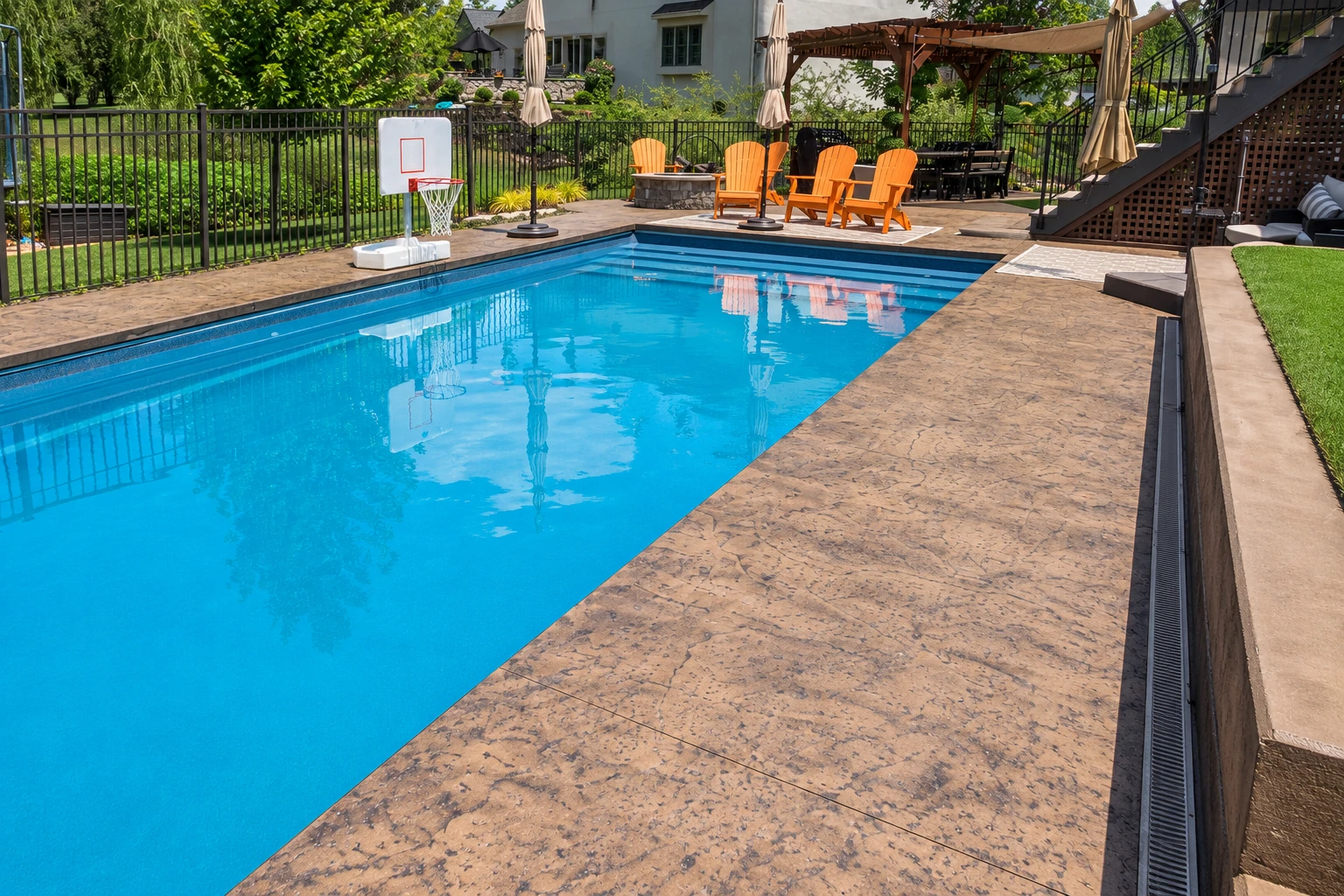
A new floor often brings other work with it. If the room opens onto the backyard pool, we can plan a concrete pool deck along with the floor so the two surfaces meet cleanly, and where the finished floor sits above the yard, we can build concrete steps at the door to match.
Slab for tile, wood or carpet
This suits a room that will get a covering, because we build in the moisture protection and plan the curing around what goes on top. It's the reason I ask about your flooring at the first visit.
Finished concrete floor
This suits a workshop, storage room or converted garage where the concrete itself is the floor, so the time goes into a smooth, even troweled surface. Near doors or wet spots we can leave a broom finish, a fine brushed texture that gives shoes some grip.
Get a written estimate for your concrete floor
Send the form and we'll reply within one business day to set a time for me to come out. I'll look at the ground, the drainage and the access, then give you a free written estimate that lists what's included, with no obligation to go ahead.
(626) 513-4658Concrete floor installation in Glendora starts with the ground
The state maps places where weak soil or rock is likely under a property, and in an earthquake that ground can give way and damage what's built on it unless the grading and construction take proper precautions. Those state requirements don't apply to a single-family frame home of up to two stories that isn't part of a development of four or more units, though local agencies can ask for more. Either way, we treat the base as the part that matters most on every floor, so we dig past loose fill, pack the ground firmly and look closely at the grading before any concrete goes in, because a floor can only be as steady as what's under it.
We're based in Glendora and work across the San Gabriel Valley and the Pomona area, and many of the floors we're asked about are for room additions, workshops and converted garages. We bring the same ground work to jobs in Azusa and San Dimas that we do here at home.
What happens after you call us about a concrete floor?
Call or send the form
We get back to you and set a time that suits you for me to come out and look at the job. Our phones are answered seven days a week, so weekend calls are fine.
I walk the job with you
I look at the ground, the drainage and how we'll get concrete to the spot, and I answer your questions. You get a written estimate that lists what's included, so you know what you're paying for before anything starts.
We prep and pour the floor
If the job needs a permit, we handle the application and inspections with the city or county office for your address, and I'll tell you at the estimate if I expect one. Our crew does the digging, the base, the pour and the finishing with me on site.
We walk the finished floor
When the work is done, we walk the new floor with you. We go over how to care for it so you know what to expect in the weeks ahead.
Frequently asked questions
How much does a concrete floor cost in Glendora?
A concrete slab in the Los Angeles area usually costs about $7 to $14 per square foot, so the size of your floor drives most of the total. Slabs with steel in them run higher per square foot than plain pads, and staining or stamping comes on top of those prices. Your written estimate lists what's included for your floor.
How long does a new concrete floor take before I can walk on it?
A new slab should be walkable within 48 hours, though concrete takes 28 to 30 days to cure fully. One cost guide suggests waiting a week before heavier loads go on it, so plan when the furniture and equipment move back with that in mind.
Will my new concrete floor crack?
Probably a little, and that's normal even on good work. Trade guidance for slabs on the ground says that even with the best design and proper construction, a floor with no cracking at all and no curling, where the slab edges lift, isn't realistic. The joints we cut are there so most cracks follow lines we chose, and I'd rather tell you that now than have it surprise you later.
Can tile or wood flooring go over a new concrete slab?
Yes, as long as the slab is built and cured with that covering in mind. Moisture trapped under sealed flooring is a major cause of flooring failure, making it cup, buckle or blister and letting the glue fail, so trade guidance gives the most protection when the vapor barrier, a sheet that slows moisture, sits right against the slab. Guidance also stresses testing the slab for moisture before the flooring goes down, once the heating and cooling system runs and the slab has adjusted to the room, and for these floors it favors curing under plastic sheeting over keeping the slab wet, so please ask us which method we'll use.
Does a contractor need a license to pour a concrete floor in California?
Almost always, yes. The state licensing board allows work without a contractor's license only on jobs of $1,000 or less, and only when the work needs no permit and the worker employs no one for it. A new floor nearly always costs more than that, so it's worth checking the license of anyone who bids on yours.
What causes a new concrete floor to dust or curl?
Poor timing of the finishing, joint cutting and curing can contribute to dusting, which is a powdery top, along with curling, cracking and high or low spots. Trade guidance calls that timing critical, so it's fair to ask any crew how they schedule each step. We plan the pour around the heat of the day, and I'm on site while the finishing and the joints are done.
Glendora, CA
Book a visit for your new floor
Have the floor's rough size in square feet and the flooring you plan ready when you call, because those are the first two things I'll ask about.