Concrete Retaining Walls in Glendora CA - a wall that drains and holds the slope
Is your slope creeping, or your old wall leaning and leaking? We build retaining walls that hold the soil and let water drain out.
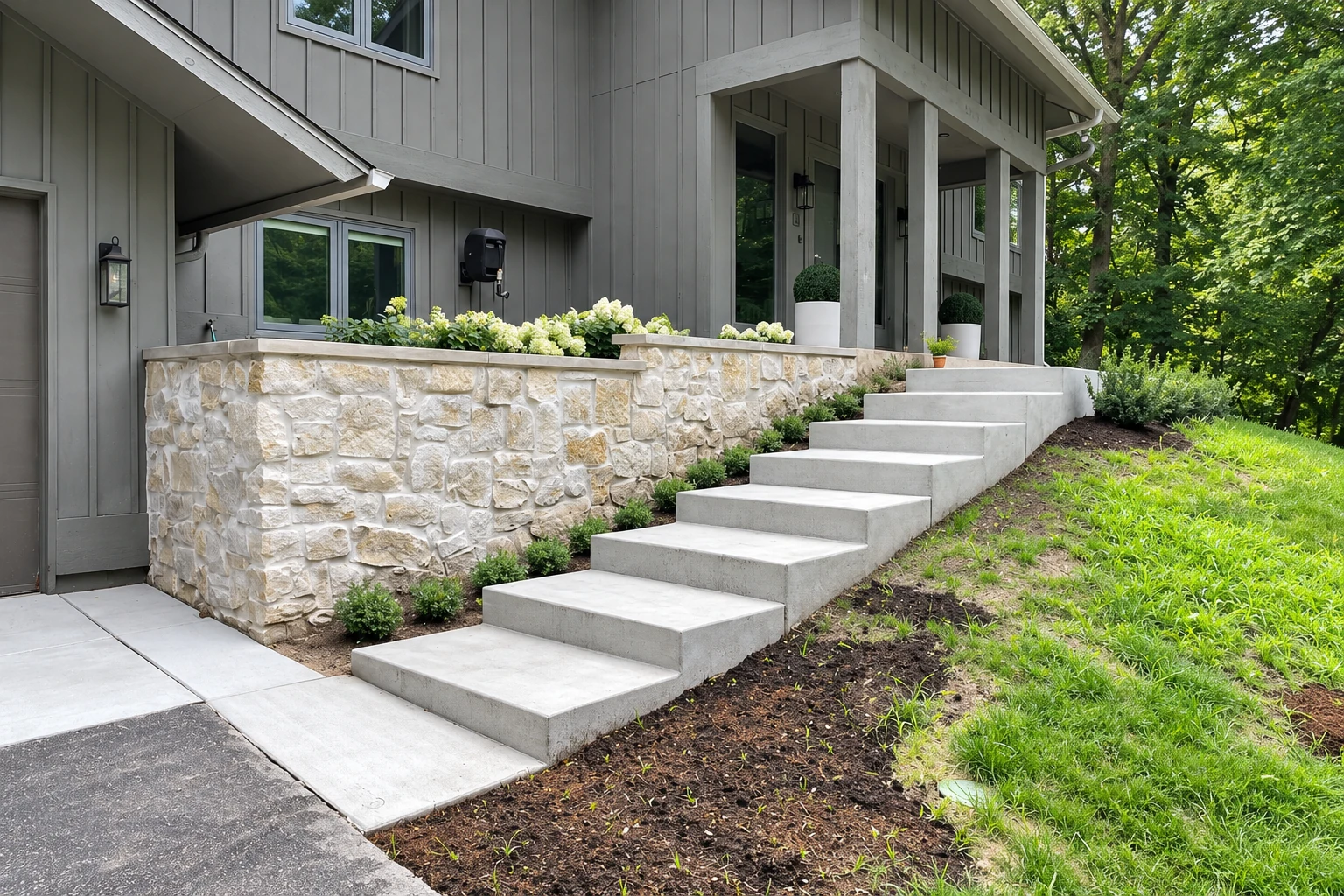
- Licensed and insured.
- Free quotes on site.
- Expect a reply within 1 business day.
What should you know before building a retaining wall in Glendora?
A concrete retaining wall holds back the soil behind it, which we call backfill, against the push of that soil and the water that builds up in it. In Glendora we build both poured concrete walls and stacked block walls, so a sloped yard stays where you want it and gives you usable, level ground.
Most people call when a slope keeps washing onto a patio or a walk, or when an old wall has started to lean, and they want to know what a proper fix costs and how long the yard will be torn up. The price turns on the kind of wall, its length and height, how much drainage it needs, how easy the site is to reach and how involved the design is. The schedule turns on the design, any permit the job needs and how much digging the slope takes. I'll give you a written estimate that lists what's included, so you have your own figure before you decide anything.
How can you tell a slope or an old wall needs attention?
The wall is leaning out
If the top of the wall is tipping toward the yard or the face has started to bulge, the soil and water behind it are usually pushing harder than the wall was built to take. Each wet season tends to move it a little further, and a wall that is caught early is often far less work than one that has pushed into a patio or a fence.
Water seeping through the face
Wet patches, white staining or mud at the base after rain usually mean water is trapped behind the wall with no clear way out. Wet soil is heavy, so the longer that goes on, the more strain the wall carries, even if it still looks straight.
Dirt sliding onto hard surfaces
When a bare slope keeps spilling soil over your driveway, walkway or patio after every rain, the hillside is moving a little at a time. Planning a wall now is usually easier than cleaning up after each storm and repairing the concrete the soil has undermined.
How we build concrete retaining walls
We start by helping you decide between a poured wall and a stacked one, since that choice sets the budget for everything after it. After that, most of my attention goes to how water will drain from behind the wall, because wet soil pushes far harder than dry soil and a wall with no way to let water out has to fight both. We dig out and compact a firm base for the wall to sit on, since a wall is only as sound as what's under it, then build the wall, put the soil back behind it and leave your yard clean. If a budget has to give somewhere, I'd rather you choose a plainer face than cut the base or the drainage, because nobody sees those on the first day and they're what decides whether the wall holds.
A retaining wall often makes room for other work. When a wall levels part of a sloped yard, that flat ground is often where a concrete pool deck goes next, and we plan the drainage so water from the new surface doesn't run in behind the wall. A wall cut into a hillside beside the house can also open up space for a shed or workshop that needs concrete floor installation on level, well-packed ground.
Poured concrete wall
This suits taller walls, tight spots and walls with a patio or a building close to the top, because the footing and the steel bars inside can be designed for that load. It costs more, and it needs weep holes, the small openings that let water out through the face.
Stacked block wall
This suits garden terraces and lower slopes when you'd rather spend less on the wall itself. It can also read more like landscaping than structure, which many homeowners prefer in a backyard.
Get a written estimate for your retaining wall
Send us a few details about your slope and we'll reply within one business day to set a time for me to come out. The estimate is free, done on site and carries no obligation. I'll walk the yard with you and leave you with a written estimate that lists what's included.
(626) 513-4658Building concrete retaining walls in Glendora
The city or county office that covers your address decides whether your retaining wall needs a permit, so I'll look at the lot and tell you at the estimate if I expect one, and when one is needed we handle the application and the inspections. California requires cities and counties to use the state's seismic hazard zone maps in their building permit process, and the earthquake landslide zones on those maps generally mark steep hillslopes of weak material that may give way when shaken. On a steep lot, that is one more reason the design, the base and the drainage deserve care before anyone talks about the look of the wall.
Many of the walls we're asked about here hold back a slope behind the house or square off part of a yard so there's level ground for a lawn or a patio. We see the same kinds of sloped yards on jobs in San Dimas and Azusa, and we plan those walls the same way, starting with where the water will go.
What happens after you call about a retaining wall in Glendora?
Call or send the form
Call (626) 513-4658 or send the form with a few details about your slope. We'll set a time that suits you for me to come out and look at it.
Walk the yard with me
I look at the ground, the drainage and the access, help you weigh a poured wall against a stacked one and answer your questions. You get a written estimate that lists what's included, so you can compare it line by line with any other quote.
Permit, prep and the build
If you'd like to go ahead, we handle any permit the job needs, and our crew does the prep and the build with me on site. The base and the drainage go in before any of the wall you'll see goes up.
Walk the finished wall together
When the work is done, we walk the finished wall with you and go over how to look after it. Please ask anything that's on your mind while we're standing there together.
Frequently asked questions
How much does a retaining wall cost near Glendora?
A retaining wall in the Los Angeles area usually costs about $20 to $45 per square foot installed, and that is the going rate across the market rather than our price. Where a wall lands in that range depends on the nature of the project, the site's location and access, how complex the design is and the scope of work, with the choice between poured and stacked moving it most. I'll give you a written estimate for your own wall once I've seen the slope.
What causes a retaining wall to fail?
Most retaining walls fail because water or soil moisture builds up behind them, so every wall should give that water a way to drain off. When you compare bids, it's fair to ask whether the wall gets gravel backfill or drainage blankets and drain pipe, plus the weep holes a poured wall needs. Weep holes often clog from poor backfill, plants, animals or trash, so what goes behind them matters as much as the holes themselves.
Is a stacked block retaining wall cheaper than a poured concrete wall?
Yes, a dry-laid stacked wall is usually much less expensive than a poured concrete wall. The blocks are manufactured concrete units set without mortar and held in place mainly by their own weight, while a poured wall is formed and filled on site. I'll tell you at the estimate which one your slope and your budget suit.
How do I know how big and strong my retaining wall needs to be?
Height alone won't tell you, because the footing, the steel bars inside, how deep the wall goes into the ground, the drainage and what's assumed about the soil should all come from a design for your project or the code that applies to it. When you're comparing quotes, ask each contractor what theirs is based on. I'll tell you plainly what mine assumes.
Can I add a driveway near my retaining wall later?
Adding a driveway near the wall later can undo what the wall was designed for, even when the concrete itself is strong. Changing the soil behind the wall or letting water build up there can do the same. If you think a driveway or a parking spot may go near the top someday, please tell me at the estimate so the design can take it into account.
How long does it take before soil goes back behind a new poured retaining wall?
Soil goes back only once the wall has gained enough strength and has any bracing it needs, so it doesn't happen the day the wall is poured. It's then packed in controlled layers, and heavy compaction machines shouldn't run right behind a young wall because they can overload it. That's why I set the backfill day by how the wall is curing, which is the wait concrete needs to gain its strength.
Glendora, CA
Send us photos of your slope
A few photos, the length and height you have in mind and any plans for a driveway near the top let me arrive at the estimate already thinking about your design.